
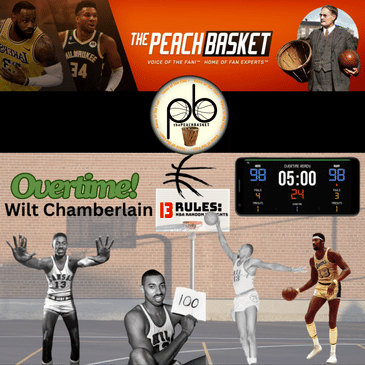

Welcome to the inaugural episode of 13 Rules Overtime, hosted by Jose Salviati and Steve Purciello. In this episode, Jose and Steve delve into the legendary Wilt Chamberlain's career, discussing his outstanding achievements, physical prowess, and the myths surrounding his persona. Steve shares personal anecdotes and detailed insights from his era, revealing Chamberlain's dominance, his infamous load management, and his versatility on the court. They compare Wilt's game to modern players, particularly Shaquille O'Neal, and discuss how Wilt's unique skill set would translate to today's game. Don't miss this captivating episode where past basketball legends come alive through vivid stories and expert commentary.
00:00 Introduction to 13 Rules Overtime
01:08 Discussing the Legend: Wilt Chamberlain
01:39 Wilt's Athletic Prowess and Achievements
04:32 Wilt's Challenges and Criticisms
17:35 Comparing Wilt to Modern Players
21:40 Conclusion and Future Topics
Powered by Beamly
Welcome to the best 15 minutes of NBA Random Thoughts online! Here, we dive into all things NBA with quick, thought-provoking insights that will keep you entertained and informed in just a short amount of time. From game recaps and player performances to trade rumors and latest news, we cover it all in this fast-paced segment.
Stay up-to-date on your favorite teams and players, and join the conversation by sharing your own random thoughts in the comments section. Whether you're a die-hard fan or just looking to stay in the loop, our 15 minutes of NBA Random Thoughts will provide you with a quick dose of basketball goodness that you won't want to miss. So grab your coffee, take a seat, and let's dive into the exciting world of the NBA!
[00:00:00] All right, it's time for extra basketball. This is 13 Rules over time. This is the show where Steve and I are going to discuss players from the past, players you may not have seen, players that you've probably heard about, and we're gonna discuss who they were.
[00:00:21] It's very very high likelihood Steve got to see them play. I might have gotten to see some of them play. And then we're going to talk a little bit about who closely resembles them in this show. Again, 13 Rules over time. I'm Jose Salviati, editor at thebeachbasket.net.
[00:00:35] He's Steve Pritchell, a longtime high school basketball coach, educator, vice principal and athletic director. And this is 13 Rules over time. We're grateful you're here. This is kind of a passion project.
[00:00:49] This is something, you know, every conversation Steve and I have, we kind of talk about, you know, the old times, which is so weird to tell them the old time. But yeah, we talk about 70s basketball, 80s basketball.
[00:01:04] And so this is again, kind of a bit of a passion project. This is the stuff we talk about. We thought you'd enjoy listening to it as well.
[00:01:12] The first player that we're going to discuss is the great Will Chamberlain. I called him an enigma in the 13 Rules show because that's kind of how I know him. I never got to see him play.
[00:01:27] But I heard rumors. I heard stories. Some of them were complimentary, some not so much. But I'm fascinated to know who Will Chamberlain was on the basketball court. So Steve, you got to see him play. Tell us about Will.
[00:01:47] He only won two championships. But, but let's think of some of the things he did in the day of world management today. He in his career averaged 47.2 minutes. Stupid. Wait, five times he was 48 minutes or more. Right.
[00:02:06] He was career. Think about that one. Next numerous scoring titles. One year averaged over 50 points a game. Yeah. Then he decided, I guess when he was with Philadelphia, he was going to lead the league in assists. And he did.
[00:02:22] What else? Well, he's pretty good track guy. I know he was timed under 10, under 11 seconds on 100 yard dash. I think he won the, I think, well, is it the high jump? Maybe three years in a row and in college and in his lead championship.
[00:02:39] Great volleyball player. You know, what else? There was so many things here. Here's an interesting thing. At one point sport magazine was the big magazine. It was a monthly magazine back then.
[00:02:52] The big talk was what was going to fight Muhammad Ali. And he was offered a lot of money to do it. And he talked about, you know, whether we should take it and so on if I remember correctly, but that was a big thing.
[00:03:04] This monster was going to fight the great monster, meaning seven foot. Yeah, yeah, yeah. Was going to fight the great Ali and there was talking. It was, you know, people thought it was going to come come through.
[00:03:16] Never did, but that tells you the kind of athlete and how he was looked upon by everybody else. He played for Harlem Globetrotters who at the time were great, a great act and everybody did go see them.
[00:03:30] So, you know, I can go, I can continue to give the, the accolades. I just think scoring 50 points a game is one of the most incredible things as a, as a fan on TV.
[00:03:40] I watched him and Bill Russell go at it. Now you got to understand Bill Russell was in a knife fight without a knife.
[00:03:48] Wilt was so much bigger and stronger than him. And all Russell could do was try not to let him go off for ridiculous amount of points. And, you know, Russell held his own and to some extent nobody held their own against will make stand. He held his own.
[00:04:06] You know, going back to will he had 55 rebounds in a game. That's more than most teams get today. Right, right. That's like every rebound. You know, I can keep, keep going on. Yeah. I just remember he had the little finger roll going to the basket.
[00:04:24] He, the thing that is similar to the person we're going to compare him to is he couldn't shoot foul shots. It's terrible foul shooter. But, but what else? I mean, there's so many things he did in that career.
[00:04:39] The 50 points again, I just keep coming back to it and the criticism he took for not winning. There's one negative story I'll tell. This is 1968. You know, I guess it would be 68. Bill Russell second year as a, as a coach player coach.
[00:04:57] Now Russell was a player coach for the Celtics. Right. Philly was coming off a title the year before the great team.
[00:05:06] They played Boston in a series of Philly gets off to a three to one series lead everybody's, the crowds were saying, you know, the dynasty is dead and all that stuff is chanting and all.
[00:05:18] But anyway, Boston comes back ties to series of three three back then you got the games on Sunday beating get a lot of the games.
[00:05:24] So now it's game seven. If I remember correctly, it was a third Friday night, I believe, but the game was on a local radio station. I believe it was WHN, which was in New York, New Jersey. Anyway, we had the game on.
[00:05:37] I'm listening naturally. Boston's losing at halftime. I don't know what happened, but supposedly will had a little problem with something he decided he was only not going to shoot the second half. He took two shots. Boston went from losing and won the game 100 to 96 or 95.
[00:05:55] But I remember that really well, like I was as a Boston fan growing up shocked that what happened because I expected the worst knowing that Philly Philly was loaded. They had him they had how Greer Hall of Favor.
[00:06:09] They had Chet Walker, I believe the Hall of Favor, Luke Jackson, Billy Cunningham was the sixth man on that team. A great, great team they had.
[00:06:19] And they lost that game to Boston, who had an older 33 year old Russell along with Daily House near the end of his career and just an older team that was just staying together because they had Russell. And it was an incredible, credible upset.
[00:06:36] And we'll took a beating for that series, losing that series because Philadelphia was considered the next dynasty coming off the year before.
[00:06:47] So I do remember that and then I remember the next year in game seven against the Lakers in Boston when will supposedly got hurt with five, six minutes left. When out of the game, Mel Counts came in scored a bunch of points. Will wanted to go back in.
[00:07:04] Butch Van Bredeckoff as coach wouldn't allow it. They lose to Boston, which was a major upset because willed had himself Baylor and West together. Major upset and will took a pounding for it.
[00:07:18] But to even consider, he took teams earlier in his career that didn't compare to the great Boston when Boston was in their run. They lost one game on a last second shot again.
[00:07:33] I think it was Paul Arozen who missed a shot who was a pretty good shooter at the buzzer that would have won it and got him to the finals.
[00:07:40] The other time, Halvichick stole the ball at the end of the game to beat them in the finals in the seventh game. So he was always the loser on bad luck as well as getting beat.
[00:07:52] He was just I guess he was so good and so big that everybody didn't like him and criticized him. He was he was head and shoulders above everybody in the NBA at that time.
[00:08:03] Am I hearing you right though? Because you started by saying he won twice, but then it sounded like you said he could have won a couple more. If he didn't pout right in Philly and only take two shots they probably would have won that game.
[00:08:20] If he if he wouldn't have pouted it again in LA and actually coach would have let him in. They might have won that game. You know the Halvichick's deal that's that's that's that's the Johnny Mosh game.
[00:08:32] That's the I remember that I don't remember the game but I remember hearing about it. But it sounds like Will Chamberlain was his own worst enemy maybe a little bit. He took a beaten consider the loser and he was not beloved as he should have been.
[00:08:50] Yeah, yeah, yeah. You know you're not talking and the one thing I want to emphasize when I talked about the track what he did on the track and volleyball is a great volleyball part.
[00:09:00] The thing that people lose sight of because of his size and he's one of the greatest athletes that ever played basketball. And people lose sight of that because they think he's just a big, you know, big guy that's just bigger and can out outplay.
[00:09:16] Well there's a lot of seven footers right that Henry Finkle. I mean, Walt Wesley these this is back in that time they were seven footers. Right. You never heard of them so how good will was back then Russell was six nine and a half.
[00:09:33] Unsulled was 68 half Willis Reed was about six nine. So what was bigger much bigger than these people both saw height and physically way stronger than these people. Yeah.
[00:09:47] Yeah, and I think that works against him right because people who don't know any better just looking oh yeah of course he's good look how big he is but you needed more than just to be big right.
[00:09:58] The NBA is littered full of some seven footers who starting from that era all the way to today you got you know I can think of Michael O'Candy but no he Benjamin there's a lot of players that were big who weren't particularly good.
[00:10:11] But yeah that's tough on Wilts behalf of those games they almost. Want against the Celtics in the 60s not not the late 60s to mid 60s Boston team was loaded with all famous.
[00:10:23] They had more talent and people forget that they they more or less just think about you know that that will lost well he was taking teams that really weren't that good and by the way I forgot one other thing he did which is a small achievement.
[00:10:40] He scored 100 points in a basketball game. I had heard about that really. Wow well film of it because it was in her right where she Pennsylvania yeah and nobody filmed it so you know it just 100 points yeah shocking famously made I think 28 out of 30 free throws to.
[00:11:01] Yeah he had a tremendous way better than because he was a poor free throw shooter right tremendous tremendous game at the foul line in every way I think he found out to next in that game.
[00:11:13] Wow so I just you know it just there's so many great things that he did in his career.
[00:11:19] Well before we go to you know bringing him kind of to today's era by you know form of a comparison I want to stay in his era because when I think you answer this a little bit but I want to elaborate you know when I think
[00:11:34] I think of the skyhook right when I think of Elijah one I think of those low post moves George Gerbin had the finger roll how did will get his points was there a midrange jumper there or was it all two feet non-dare.
[00:11:45] He had a fall away but he also had a little finger roll going to the middle it was it was impossible stop and he would do that don't forget he got position because of his strength and size.
[00:11:57] Yeah in the world deep and he just he would he would just turn figure roll it and put it in or just dunk it I mean you know he was just so bigger and so much bigger and stronger than than the everybody in the league.
[00:12:13] You know there's a famous story that he almost got he Tommy Heinzen and him went at it and he was going after him and I think Sam Jones picked up a chair to defend himself because will you know he was afraid that will was going to get him.
[00:12:29] Sam Jones yeah wow the story everybody was afraid of him you know because he was so big and you didn't want to get him upset because he would go off. It was you know a man among boys back then. Yeah.
[00:12:45] An area that I don't think I've ever heard discussed about wills game is his defense right we always hear Bill Russell great defender great defender.
[00:12:55] I can't I got him I mean I've seen the clips I've seen a will chamberlain invariably they see you know we show him you know to jump in two three feet over the rim to block a shot.
[00:13:07] I mean he had to have been a great rim protector was he bad defensively or was he OK. Oh he was great. He was right.
[00:13:15] I think he's the all time rebound leader but I think I'm not positive but also when you get 55 rebounds a game that alone makes you a pretty good defensive player. He also blocked a lot of shots. Yeah.
[00:13:27] Back in the time there was no statistic for block shots so nobody really knows what Russell did. The big thing Russell had that I don't know who got credit for Russell supposedly kept the ball on the court when he blocked it and his team could get the ball and go with it
[00:13:42] and get the break going. Right. Well a lot of times from what I saw the games I saw he would block it demonstratively and the ball. Like yeah and it would go out of bounds or whatever. Yeah.
[00:13:55] That was a little bit a little bit different by the way one other thing too and I believe going way back there wasn't a goal tending and going back to when he guy Rogers who's a great playmaker in his day this is early well he would throw it to the basket
[00:14:09] and what would jump and guide it in. There wasn't offensive goal tending. Right. So he can do that so there was so that's how we scored a lot of his points. But again you had to do more than that to score 50 points in a season per game. Yeah.
[00:14:24] Yeah. You know I think to me when I think of Wilt you know for all of the awesomeness that you just mentioned to me the most impressive thing is and it's so hard to say because there's so many impressive things but for him to just wake up one day
[00:14:42] I'm over simplifying it here but I think I want to lead the league and assist and then do it. The only center to lead the league and assist because he wanted to that just that's mind boggling honestly and I just you know to be a good assist guy.
[00:14:59] I mean you've got to know the game. You've got to trust your players. You've got to give them the ball at the right place and you mentioned earlier he didn't you know for a time right he didn't have the greatest teammates you know he didn't have the Hall of Famers right
[00:15:12] that Boston had so who if you remember who were his teammates when he led the league and assist it had to have been pretty good.
[00:15:20] He was with Philadelphia probably I'm sure how Greer who was a Hall of Famer right. Right. Right. I don't know if Chet Walker had started yet that's a good question.
[00:15:32] That's a good question. I have to think but I know how Greer was with him maybe Luke Jackson who was more of a rebounder and a beast he was tough. He flamed out quickly in his career but he was really good.
[00:15:48] I'd have to think nothing's coming to me but you know those were Dave Gamby maybe he was a decent player but you know I'd have to have to look it up to be honest with you.
[00:16:01] No no I mean just to me it's fascinating that he decided to do it and he did it. I mean what comes to my mind is you know he started to realize and I don't know right because but it seems to me if you're a seven footer you're going to double team the guy when you double team someone someone's open
[00:16:18] and that's where I think will dislike you know I'm getting grossly over simplifying he figured out you know this two guys on me I'm just going to give it to the open guy. There's my assist did they double him. I mean I imagine you had to
[00:16:31] I think they back then defenses more or less backed him and he was so strong and you know a lot of times and Russell used to talk about pushing the person out of where they want the ball. Sure.
[00:16:44] You know he was bigger and stronger so you had a problem. You know there's nothing there's nothing you could do to stop him from getting it my my and I'm trying to go back to that that time might have been Wally Jones was one of the guys who's a nice player but he he
[00:17:07] he just you know he could do so many so many things with the ball and you're right they probably did double bad I don't recall but they probably did double and he probably kicked it but but it just it's incredible. I think he average nine assists again back then and back then if I'm if my memory is right
[00:17:27] assists were not as liberally given as they are today meaning if you caught it I believe it was one dribble shot but a lot of times now if you know you get a pass you need to read yeah I believe and again I'm not positive but I think that was one of the things so nine assists was a great deal of assist
[00:17:47] yeah we're West broken people like that average more than that. Yeah yeah yeah wow I mean fascinating fascinating you know like I said I started this by saying he's a bit of an enigma and I feel like I have a clear picture of who it was and what his game was like so now let's bring it current
[00:18:08] current you know it's a kind of it's a kind of it's a question I don't like necessarily asking is it's hard right apples to apples is difficult when you talk about different eras but you know if you had to say right the player that comes closest to Wilt in the modern game you know within 10 years or so who who is that player and what made it that player Wilt like
[00:18:35] like no question it's got to be Shaq it has to be it's the only one because he was bigger and stronger than everybody when he played yeah but I think Wilt was much better athlete and and Wilt was much better to be honest with him his time again you compare you know you compare
[00:18:53] the other two decades they've learned a lot more and they do a lot more as time went on basketball players but I'm just saying for his time what was way more dominant than anybody will was probably if you look at I believe he still holds eight or nine records
[00:19:06] yeah but if you look at it was probably the most dominant basketball player of all time yeah that would be the best way to I'm too old too young to remember George Mike and so you know I can't go back that far but in my time what was the most dominant I ever saw
[00:19:25] I'm looking at Shaq's career numbers and what would sticks out to me in an era that was a little more liberal right with assists his high in assists was 3.8 and his career average was 2.5 so yeah I mean I can still totally see that you know what where that comparison
[00:19:44] where that comparison. What were his rebounding averages that's right yeah so his you know highs is not highlighted but I see 13.9 looks to be as high that was his first year in the league his career average and rebounds is 10.9
[00:20:01] well got that half if you know if you want just take a look at what will rebounding averages were in different years and you're going to see over well over 20 many years yeah you know so it's you know to hold the again 55 rebounds just boggles my mind.
[00:20:22] Yeah you're getting every rebound yeah no you know I that was always kind of you know I was tall in high school unfortunately I stopped growing but my game was was was rebounding because I really did not have a jump shot.
[00:20:39] I was kind of deadly from two feet and under I was a small guy in a big man's game. But I remember man and when I coached I told my players this to me rebounding is about effort right you got to get after it.
[00:20:53] You want that ball more than anybody else. And so you know you kind of devalue it a little bit when you say of course the average you know he had 55 rebounds because he's seven foot tall.
[00:21:05] You know again we had lots of really tall players you know guys taller than will never have 55 rebounds so it's about the effort. And I just think you know it's the reason seven footers don't win dunk contests because you know people just think that they're supposed to do that is you know it really isn't fair.
[00:21:26] If you if you really want to see some interesting things go Russell I probably averaged over 20 rebounds a game also but I'm going to give you another person who was in a whole thing wasn't well thought of back then but probably averaged close to 20 rebounds and can score won't bele me.
[00:21:46] And if you know people anybody listening look them up but you know and his career ended around 75 he ended up with the jazz. But now is at the end of his career but in his day he was tremendous and he was like third fiddle another great big man was probably the third best big man of that era was Nate Thurman.
[00:22:11] But those guys again you know they don't they don't compete with Russell and Chamberlain right. Take a little chamberlain that's that's that's kind of leave those names dangling as possible possible topics right for for for future shows this is very very very cool.
[00:22:31] If you joined us you're here for the very first one the inaugural 13 rules overtime show. This is a show we take a deep dive into players who I'm sure you've heard of but maybe whose game you didn't know. I hope you learned some about will I certainly did.
[00:22:46] And we'll be back. Steve you good you're good to come back and talk about it's fun right on.
[00:22:54] Love basketball. Yeah. Yeah. Now this is this is this is awesome and I appreciate that you know that we that we can that we can do this and that there's people interested in the game that was because without guys like will belemie Aaron's in those Bill Russell.
[00:23:14] You don't have the game that you have today.
[00:23:16] So that's it. Thanks for listening. Yeah please consider subscribing leave comment leave your likes that stuff means the world to us and it helps the channel quite a bit and join us again might be next week it might not I don't know but add us on Twitter you can find us at 13 Rules NBA and we'll let you know when we'll be back Steve I appreciate the time and the inside man super super fun to learn about will we'll talk again.
[00:23:44] Thank you.